

Southwest Texas College honors first 2026 mental health tech graduates
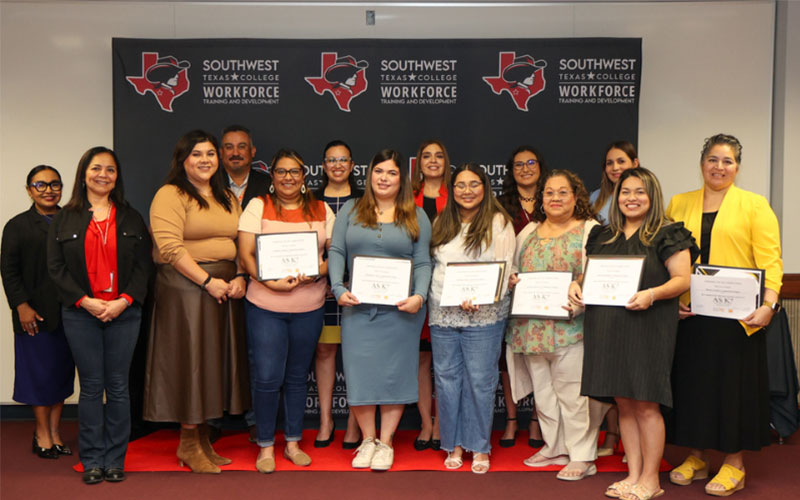
The event, hosted by the college’s Workforce Training and Development division, marked the completion of a fast‑paced, 143‑hour workforce training program designed to prepare entry‑level mental health technicians for service in the region. The ceremony opened with remarks from Workforce Education Director Kristel Sanchez, who thanked students for choosing the program and families for “picking up the slack at home” so graduates could focus on their studies. Sanchez also recognized Hill Country MHDD for helping design the program and for providing scholarships that made the course possible.
Keynote speaker Teresa Crow, M.A., QMHP‑CS, a community education specialist with the Hill Country MHDD Uvalde Recovery Program, told graduates their work is “about purpose,” not money or recognition, and called them a first sense of hope for people in crisis. She tied national mental health statistics to Uvalde’s experience after the Robb Elementary tragedy, sharing how her own family’s healing underscored the importance of education, support and ending the stigma around seeking help.
Class representative Natalia K. Diaz used the image of life as a train journey in her address, thanking classmates for “getting on my train” and calling the new credential a commitment to treating people, stories and hope — not just symptoms. She thanked instructor Rosina Salas and families for being the “energy” that kept the class moving through the four‑month evening schedule.
Mental health coordinator Graciela Rocha told graduates the certificate is a milestone and a starting point, noting that skills in communication, crisis awareness, ethics and substance use can lead to additional certifications, an associate degree in mental health or substance abuse, and eventually fields such as psychology or social work. Rocha said professionals with lived experience, language skills and cultural understanding are especially needed in border and rural communities like Uvalde.
Instructor Rosina Salas, who has now taught three cohorts, said she grew attached to the class over 143 hours of instruction from 6 to 9 p.m., describing the graduation as a “declaration” that students are ready to share their understanding of mental health with the community. Salas emphasized that “a test does not tell your knowledge,” praising the group’s empathy and commitment and thanking families for supporting graduates as they balanced education and home life.
The ceremony ended with the presentation of certificates, group photos on stage and an invitation for families to join graduates for pictures to celebrate the milestone.